Electrical Systems That Handle Commercial Load Demands
Commercial Electrical Services in Houma for businesses running heavy equipment loads requiring NEC code-compliant wiring and reliable panel capacity
Businesses along the Intracoastal corridor run heavy equipment loads that demand code-compliant commercial wiring—motors, compressors, refrigeration systems, and machinery that cycle on throughout the day without margin for undersized circuits. Charger Electrical and Air Conditioning handles commercial electrical installations, panel work, and code-compliant wiring for businesses throughout the Houma metro, particularly in the Downtown Houma and Port of Terrebonne industrial zones. Per-project scoping ensures every commercial install meets NEC code requirements without over-specifying conductor sizes or under-sizing circuits that will trip under normal operating conditions.
The service begins with calculating actual load demands based on nameplate data from your equipment, not generic estimates that ignore duty cycles and simultaneous operation patterns. Commercial wiring in bayou-region facilities also accounts for ambient temperature derating—wire ampacity drops when conductors run through hot attics or un-conditioned spaces where temperatures exceed rating tables. Each installation includes verifying that your utility service can deliver the amperage your equipment demands during peak operation.
Arrange an on-site consultation to review your facility's electrical load requirements and equipment specifications.
How Commercial Electrical Work Addresses Business Continuity
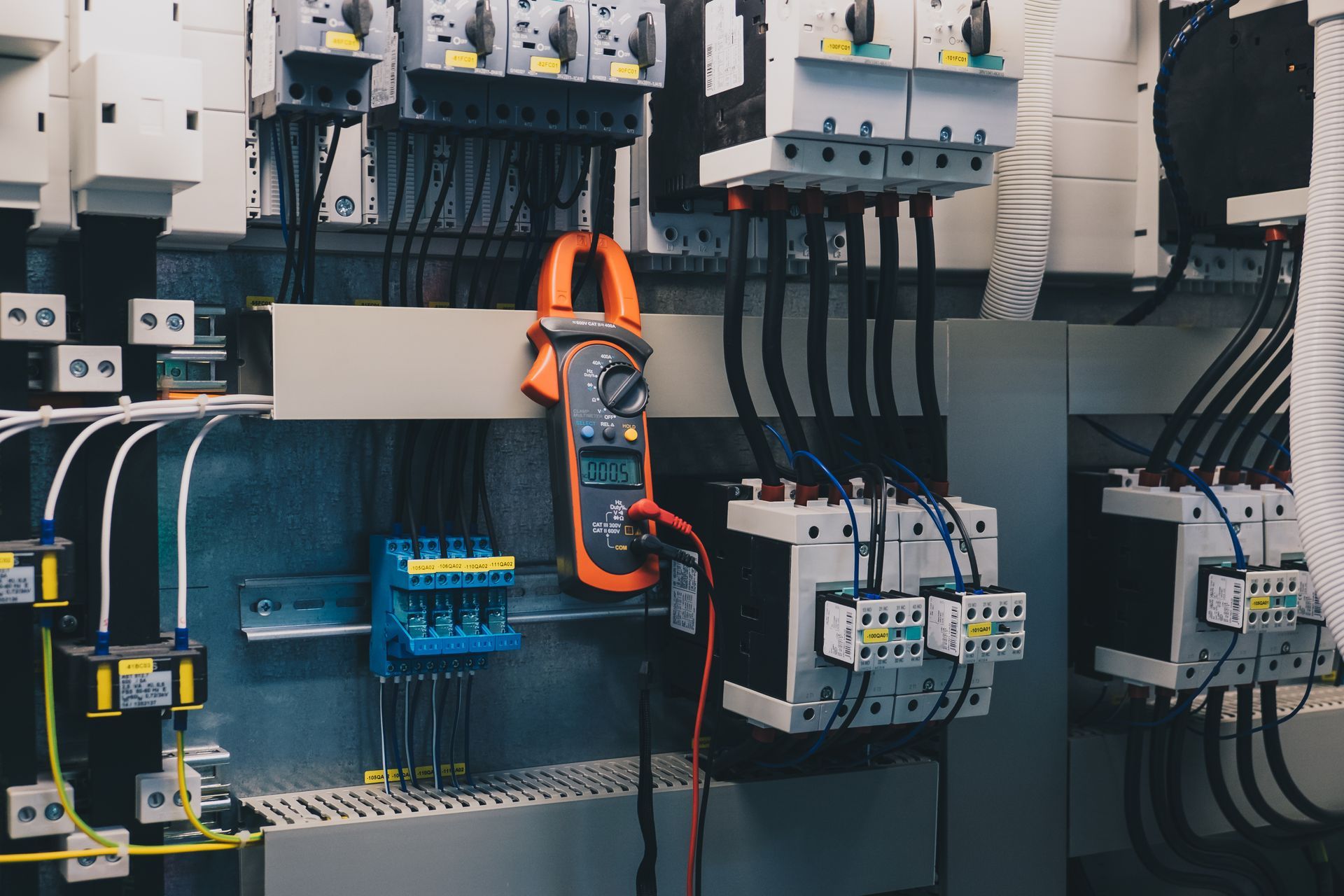
Commercial electrical work involves more than running wire—it requires calculating voltage drop over long conduit runs, sizing panels for future expansion, installing disconnect switches at code-mandated locations, and coordinating shutdowns so your business stays operational during phased installations. The difference between residential and commercial work shows up in conductor sizing, conduit fill calculations, and the use of three-phase power distribution where motor loads justify the cost.
Once the installation is complete, your equipment operates without voltage sag during startup, breakers stay closed during normal operation, and your electrical inspector signs off on work that meets Louisiana commercial code requirements. You'll also notice that properly sized circuits reduce nuisance trips that shut down operations mid-shift—a costly problem for marine-adjacent businesses and industrial facilities that can't afford electrical failures during production runs.
The work includes everything from single three-phase circuits to complete panel and service entrance upgrades, though it doesn't extend to specialized controls integration or building automation programming. Options include installing sub-panels to isolate critical equipment on dedicated circuits, which simplifies troubleshooting and allows you to shut down sections of your facility without killing power to essential systems.
Questions Commercial Clients Ask Before Starting
Business owners want to know how electrical work will affect operations and what the installation process involves before committing to a project.
What does per-project scoping involve?
The electrician reviews your equipment nameplates, calculates total connected load, determines whether your existing service can support added circuits, identifies code violations in existing wiring, and provides a scope of work that details materials, labor, and shutdown coordination.
How do you prevent electrical failures during business operations?
Work is phased to keep critical circuits energized, temporary power is supplied when necessary, and installations are scheduled during off-hours or low-demand periods to minimize disruption—particularly important for businesses operating along the Intracoastal corridor where downtime affects logistics.
When does commercial wiring require three-phase power?
Three-phase is necessary for motors above a certain horsepower, HVAC equipment serving large spaces, and industrial machinery designed for three-phase operation—single-phase alternatives exist but often cost more to operate due to lower efficiency.
What's included in code-compliant commercial installation?
Compliance includes proper conduit and wire sizing per NEC tables, grounding and bonding per Article 250, disconnect switches within sight of equipment, proper labeling of all panels and circuits, and passing inspection by the authority having jurisdiction.
Why does load demand matter more than connected load?
Load demand accounts for diversity—not all equipment runs simultaneously—which allows you to size service and panels based on actual peak demand rather than theoretical maximum, saving on infrastructure costs without compromising reliability.
Charger Electrical and Air Conditioning understands the commercial load demands of bayou-region industrial and marine-adjacent businesses, providing technically capable electrical work for operations that can't afford failures. Schedule a facility evaluation to assess your current electrical capacity and future expansion needs.